
On July 4, 1976, America was marking its anniversary. The nation was turning 200 years old, and celebrations were occurring throughout the country, but all eyes were on New York City, where tall …
Stay informed about your community and support local independent journalism.
Subscribe to The River Reporter today. click here
This item is available in full to subscribers.
Please log in to continue |
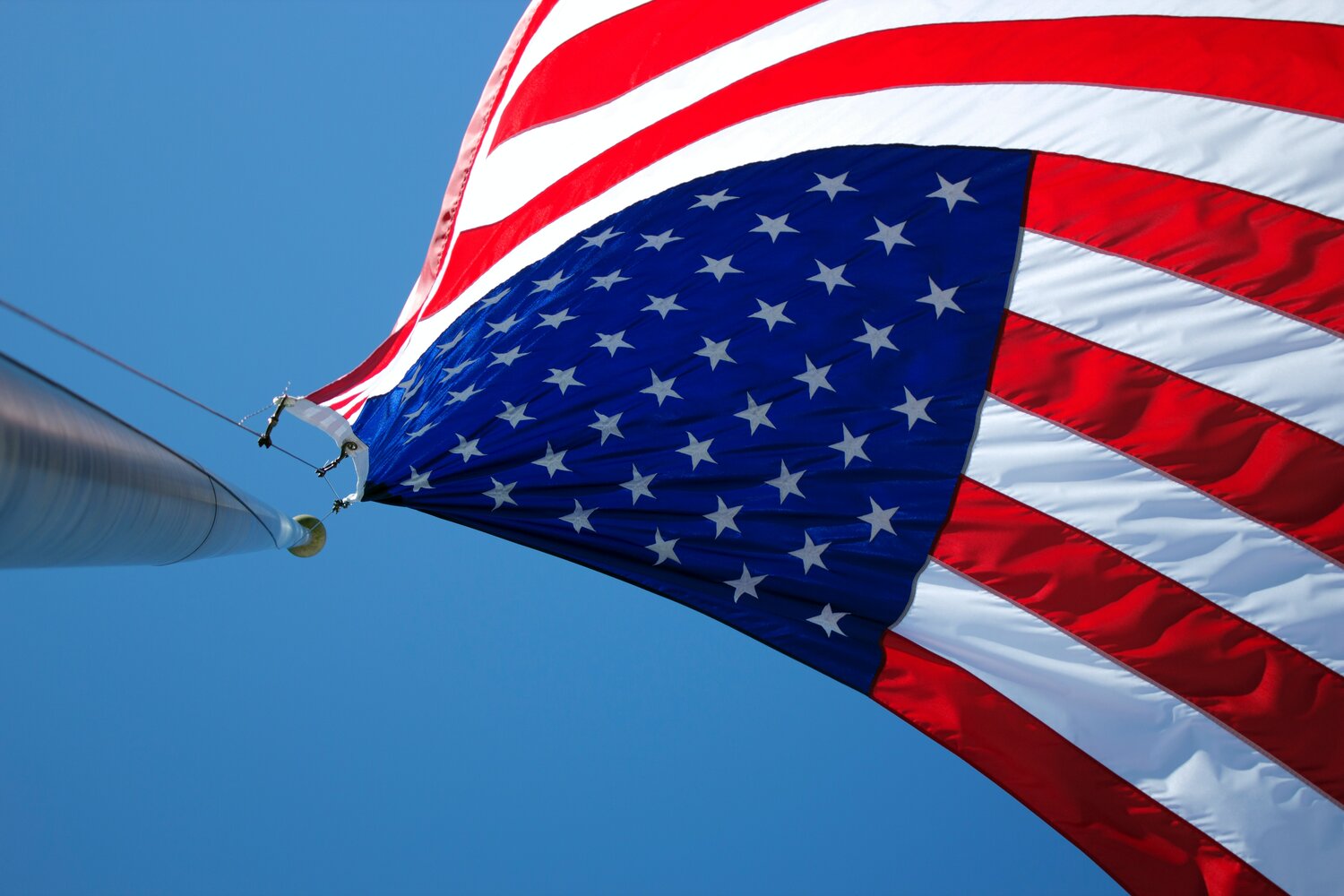
On July 4, 1976, America was marking its anniversary. The nation was turning 200 years old, and celebrations were occurring throughout the country, but all eyes were on New York City, where tall sailing ships from many nations were converging to help the United States mark its bicentennial.
The experiment in democracy that was elegantly codified by the Declaration of Independence had succeeded beyond the wildest imagination of most of the founding fathers, and it inspired other nations to cast off the shackles of oppression and breathe the sweet air of freedom.
The days when an absolute monarch could rule without accountability were coming to an end, thanks in no small part to the words that flowed from the quill pen of a then-obscure Virginia planter, Thomas Jefferson.
In the ensuing years, America had indeed become a beacon of democracy, and it was time for the party to begin.
I was a young police officer at the time. Five years before, my enlistment over, I left active duty with the U.S. Navy and exchanged one uniform for another; and here I was, working at the center of the universe, as my country was marking this historic milestone. It would be impossible to articulate the ineffable sense of pride that I felt at the time. Throngs of people were visiting the city in anticipation of viewing the tall ships that were crafted in the age of sail and would soon to be making their way into New York Harbor. People from all over the world, some traveling many thousands of miles, were here to celebrate with America.
The streets were filled with joyous people, Americans and visitors alike. The country had put out the welcome mat, and the people of the world had accepted the invitation. Foreigners would stop me and shake my hand, as if I were the representative of President Gerald Ford himself. Countless pictures were snapped with me standing with entire families or with my arm around an Asian, a European or a South American. I like to think that some of those photographs still exist today in albums somewhere, an older man or woman explaining to a grandchild that this was what America was like in 1976. To many of them, the United States then embodied the “shining city on a hill,” a phrase that was later famously used by President Ronald Reagan in his farewell address to the nation in 1989. I wonder what they or their progeny would think of the United States today.
Throughout its history, American democracy has withstood many challenges. The Alien and Sedition Acts of 1798 that empowered the president to detain and deport foreigners to the detention of American citizens of Japanese descent during World War II, strained the promise of Jefferson’s noble document. The Civil War ended de jure slavery, but it took the Civil Rights movement to put paid to the intent of the 13th and 14th amendments. The Great Depression, overseen by a president other than FDR could have resulted in a communist or fascist government, as it did in other parts of the world, but Roosevelt was able to steer the ship of state through those rough waters. Later, he persuaded an isolationist America to prepare for a war that eventually engulfed the world and made the United States the “Arsenal of Democracy.”
Throughout all of these challenges, America did not turn its back on its promise of “a nation conceived in liberty and dedicated to the proposition that all men are created equal.”
In 1976, America had just witnessed the end of another war, one in which more than 58,000 servicemembers had lost their lives. Most of them were my age when they put on their country’s uniform. Many, like me, volunteered to serve. I was only 17 years old and still in high school when I signed my enlistment papers, a sense of patriotism coursing through my veins. Others were drafted and sent to the jungles of a country that many had probably never heard of before the war started. Still others, often the offspring of the rich and connected, were able to obtain military deferment after military deferment.
Also, in that same year, the United States had a president who had assumed office as the country was in the throes of the Watergate scandal of the Nixon administration, and somehow, throughout all of the bad things that had happened to us as a nation, the promise of America had not died. Yes, there was still distrust of the government, but the spark that started a conflagration 200 years before was still burning bright. America was not perfect, but it remained the best hope of mankind.
I did not worry about the future of my beloved country at the time of the Bicentennial, but I do now. When I was a police officer, I wore a uniform and a badge with my number, making me easily identifiable to anyone who wanted to complain about me or commend me. I could not have imagined that one day there would be federal police officers, in street clothes, their faces masked, acting with impunity and shooting Americans, who by all accounts, posed no threat to them. It would have boggled the mind back then to have an administration that was outright contemptuous of judges who ruled against it, going so far as to ignore court orders when it felt the orders were unfair; and it makes me wonder now if I would proudly join the Navy whose commander in chief denigrated the military service of Navy Veteran and Sen. John McCain because he was shot down, captured and consistently tortured by the enemy.
In 1787, as Benjamin Franklin was leaving Constitution Hall in Philadelphia, he was asked by Elizabeth Willing Powel what form of government the Constitutional Convention had produced. His famous reply was, “A republic, if you can keep it.” Franklin knew that in a world ruled by autocrats, democracy was novel and fragile.
I do not know what the United States will look like in another 50 years, but I pray that this noble experiment that started two and a half centuries ago remains that shining city upon the hill and the best hope for all freedom-loving peoples throughout the world.
Peter Andrew McTiernan lives in Barryville, NY.


Comments
No comments on this item Please log in to comment by clicking here